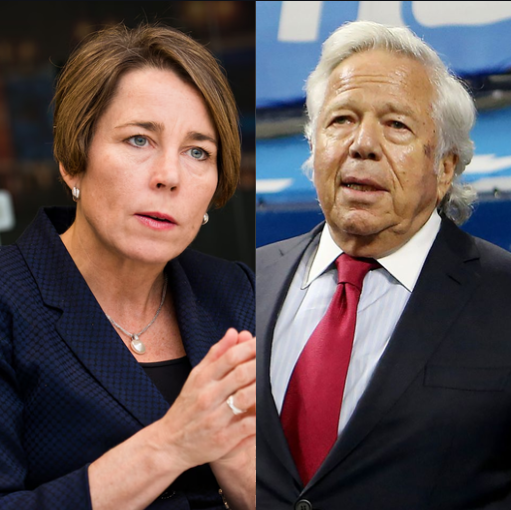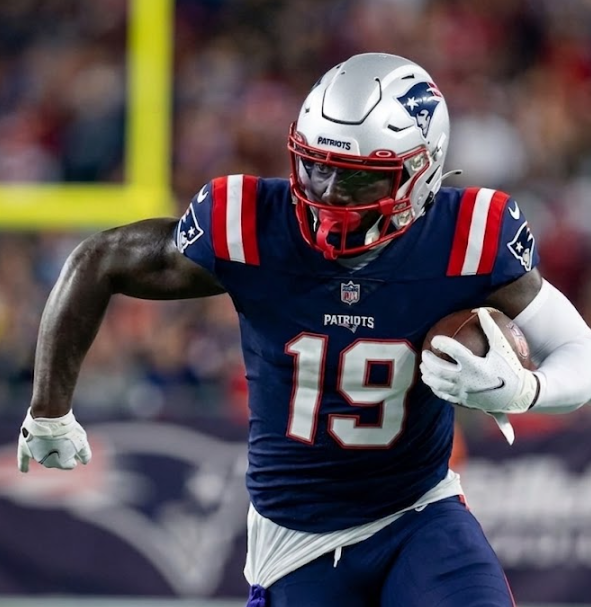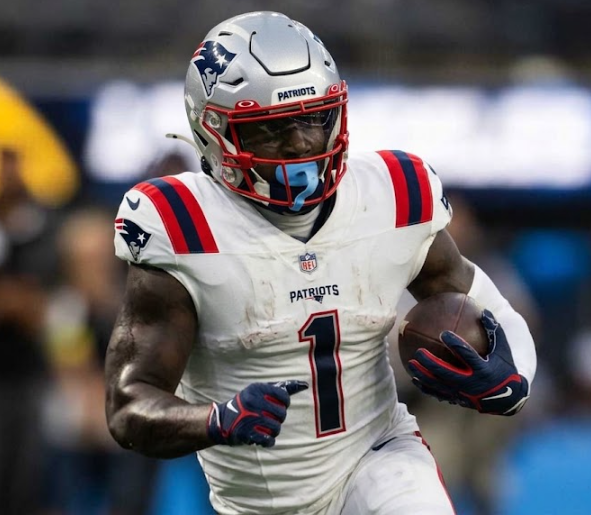
Foxborough, Massachusetts – A shocking turn of events unfolded within the NFL community when Robert Kraft, the owner of the New England Patriots, submitted a request and received 25 out of 32 votes from NFL teams to relocate the franchise to New Hampshire.
This decision seemed poised to open a bright future for the team in a new state. However, everything changed just 12 hours later.
In an emergency meeting, Governor Maura Healey of Massachusetts unexpectedly "laid down the trump card," leaving Robert Kraft and the entire Patriots community stunned.
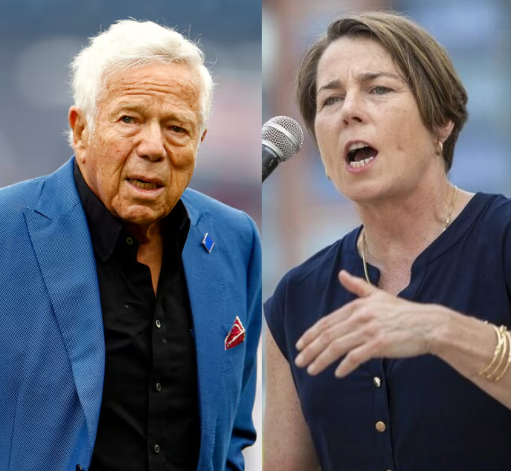
According to sources, during this tense meeting, Healey revealed a secret deal she had secured with a major group of Patriots stakeholders.
This group, made up of influential figures in the local business community, had agreed to invest hundreds of millions of dollars in developing a new sports complex right in Massachusetts — a project that could elevate both the state and the Patriots to new heights.
“We cannot let them leave. I’ve brought a golden opportunity for the Commonwealth,” Healey firmly declared during the meeting. “If the team stays, we will build a world-class stadium and training facility, and I’m committed to making the Patriots a national sports icon.”
What became most controversial about this deal was not just keeping the team in Massachusetts, but also the inclusion of terms that forced half of the Patriots’ stakeholders to shift their stance.
According to the agreement, these stakeholders were promised a massive share of profits from the sports complex project, with profit-sharing percentages as high as 30% over the next decade.
This agreement immediately sparked backlash among the remaining stakeholders, who felt manipulated and believed it was a political strategy to maintain the power of the state government while the team had little opportunity for independent growth.
“We can’t let the team be hindered by off-field decisions. The Patriots deserve fair treatment and the right to sustainable growth. What’s happening now is just holding the team back compared to other NFL teams. If they can’t develop freely, the team won’t progress,” Robert Kraft said angrily after the meeting.
The Patriots community and NFL fans immediately reacted with outrage. Many were concerned that the team was no longer a professional sports organization, but had become a political and economic asset.
Some fans argued that this was a strategic move to exploit the team for the benefit of the stakeholders and the state, instead of focusing on the team’s long-term development.
The future of the Patriots is now not just about football, but about a tense political battle. Will the team be able to develop freely or will they be bound by unwanted agreements?
The answer will soon be revealed, but one thing is clear: the outrage from the Patriots community will not fade easily.